ATHERTON UPPERHOUSE, PUSAN KOREA LUXURY RESIDENCES
UPPERHOUSE HAEUNDAE project in Pusan, South Korea, is a visionary residential development that transcends traditional living spaces by integrating digital wellness into daily life. Located on a scenic hill overlooking Haeundae Bay, each of the 12 homes in the Atherton Upperhouse features a unique "Zen Garden" artwork by Krista Kim. These artworks provide a visual and meditative experience, synchronized every 5 minutes, fostering a shared communal journey for all residents. This collective artwork, known as the "Zen Garden" series, is a groundbreaking NFT project permanently owned by the residents of each unit.
The "Zen Garden" series serves as a portal to a new form of spiritual healing, bridging the virtual and physical realms. The Atherton Upperhouse redefines luxury living by offering a collection of 12 livable works of art, each embodying a new paradigm of digital and physical integration. By harmonizing residents' lifestyles with media art, the Atherton Upperhouse establishes a new ideal of ultimate art form, seamlessly blending artistic expression with living spaces.
Additionally, the project includes a physical Zen Garden inspired by Krista Kim's Mars House, designed for the community, further enhancing the connection between art, nature, and living.
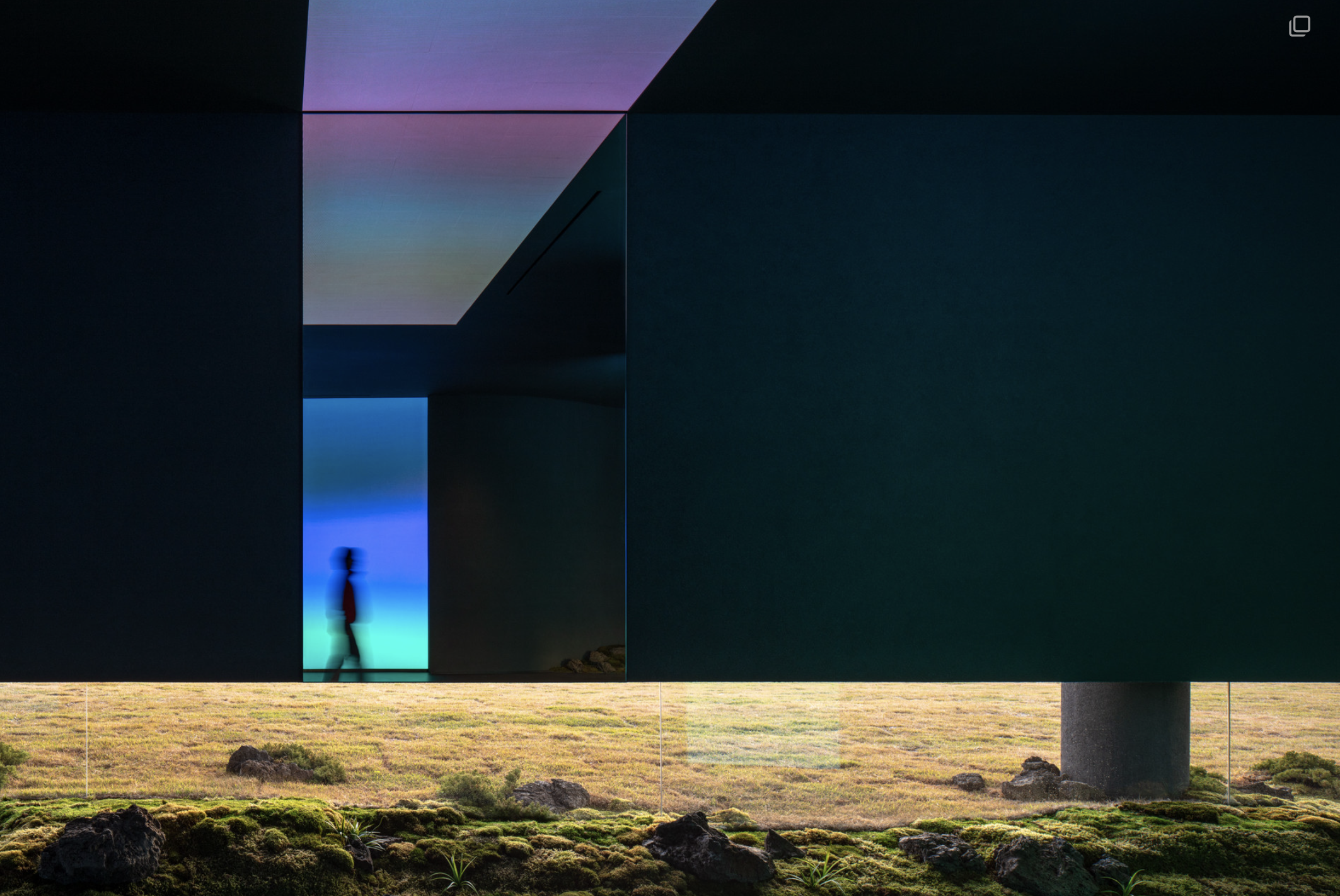
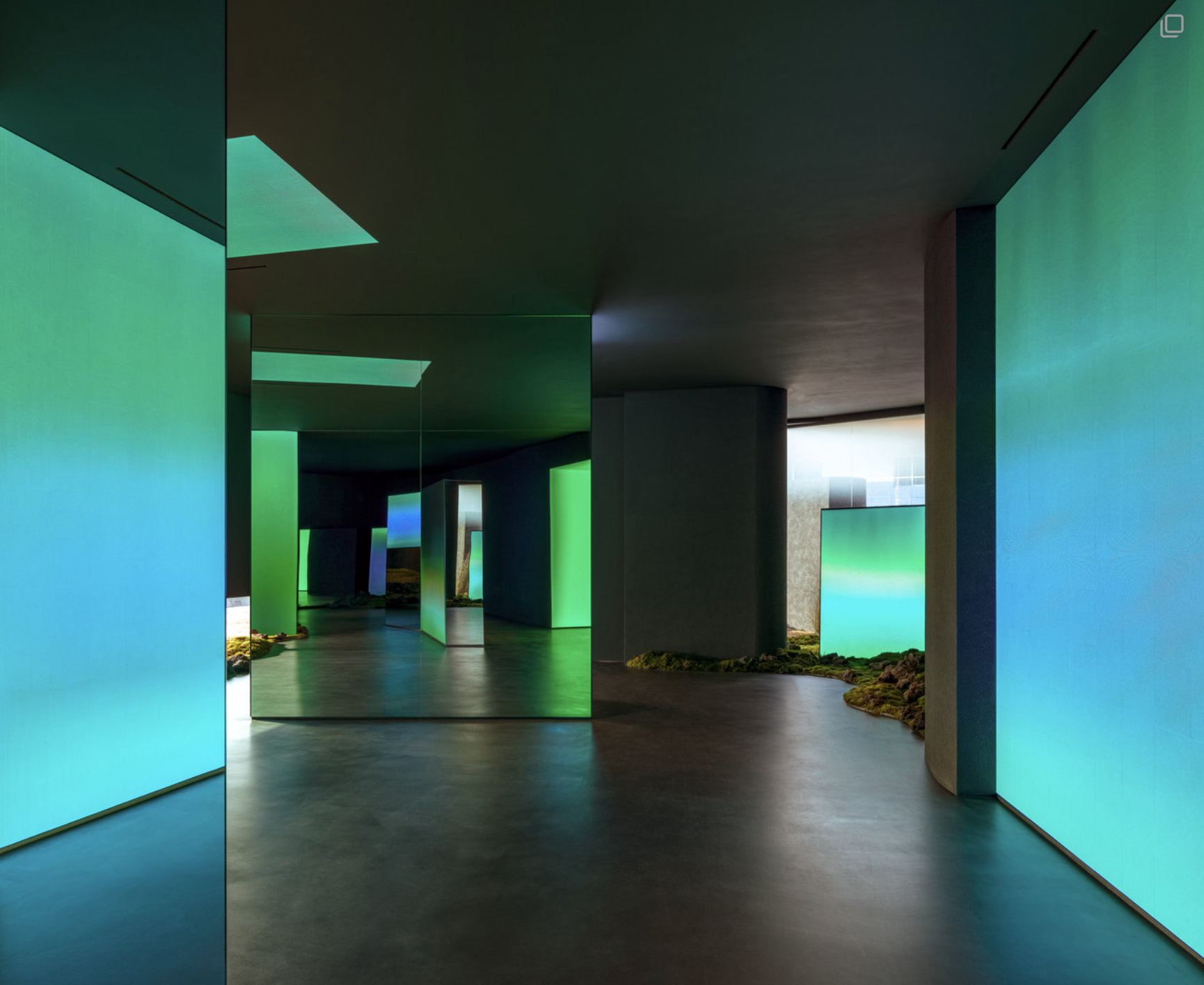
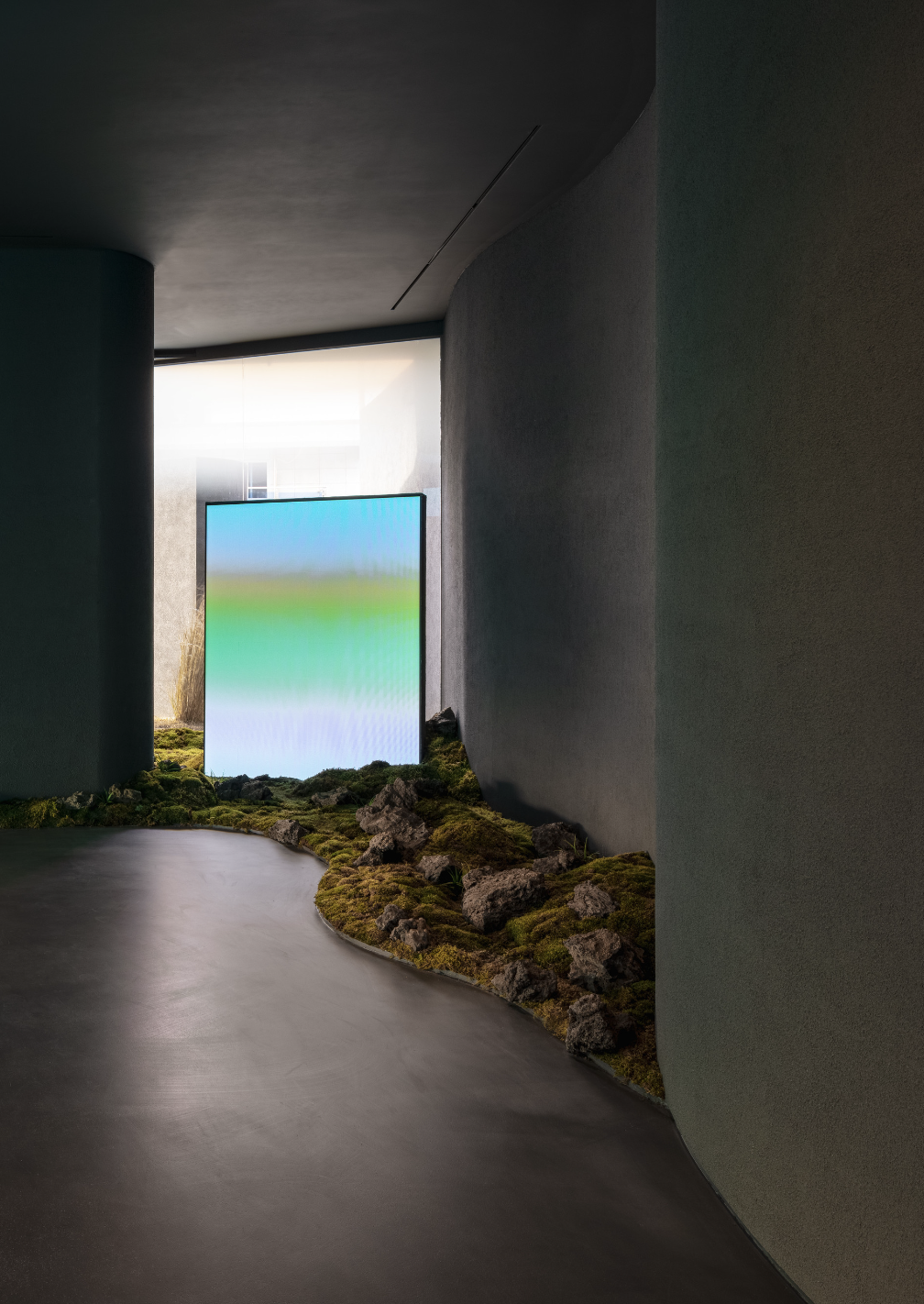
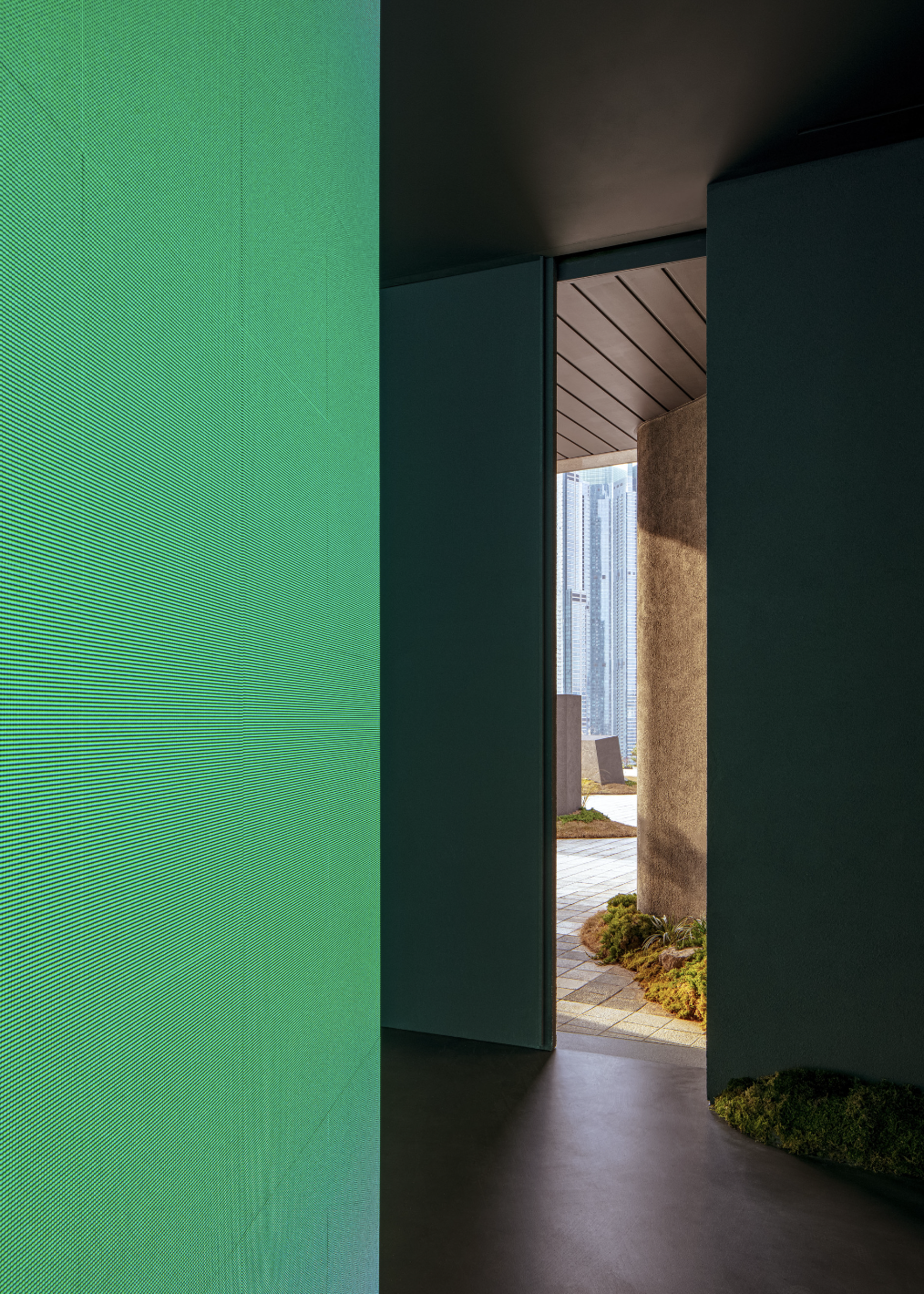
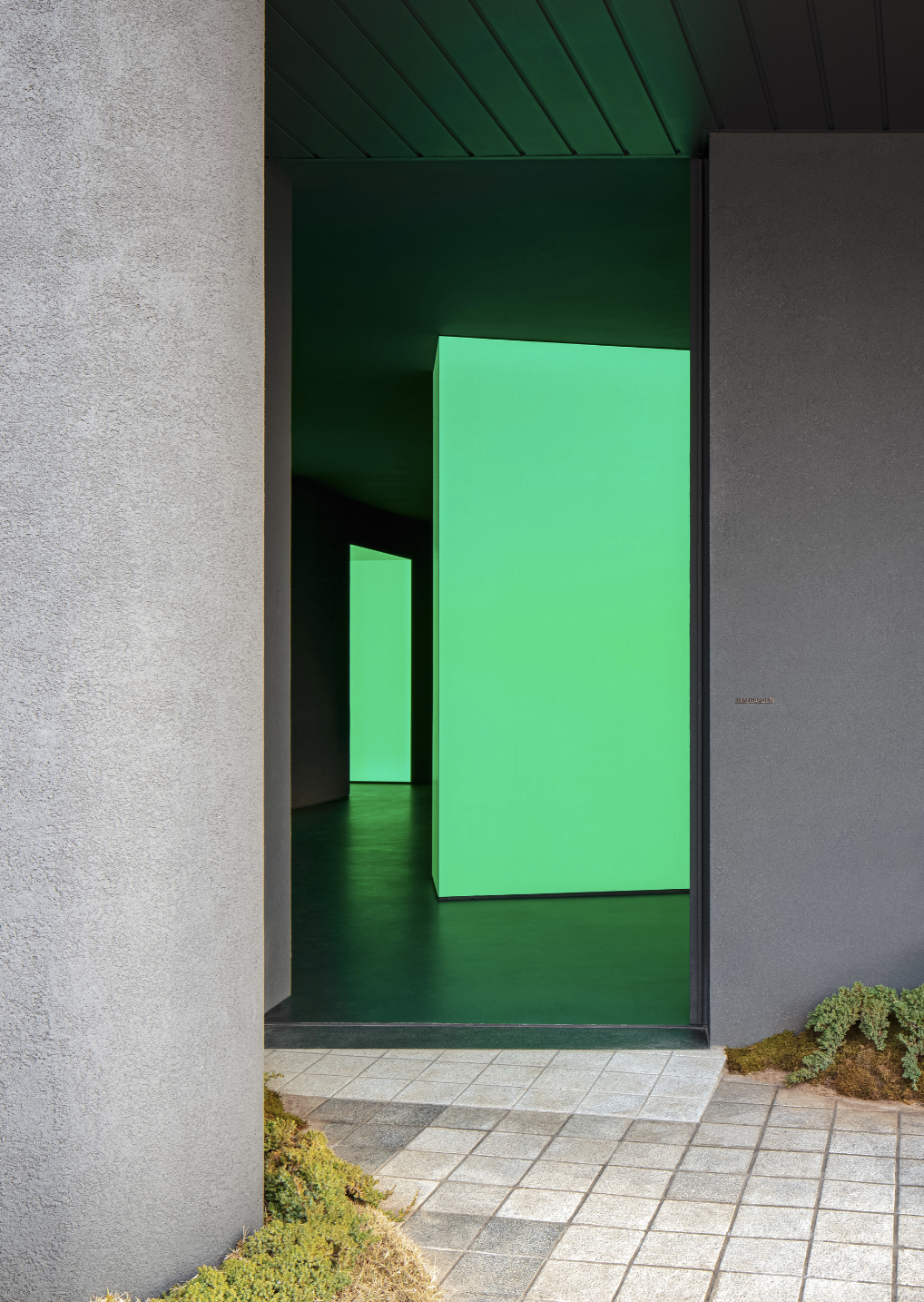
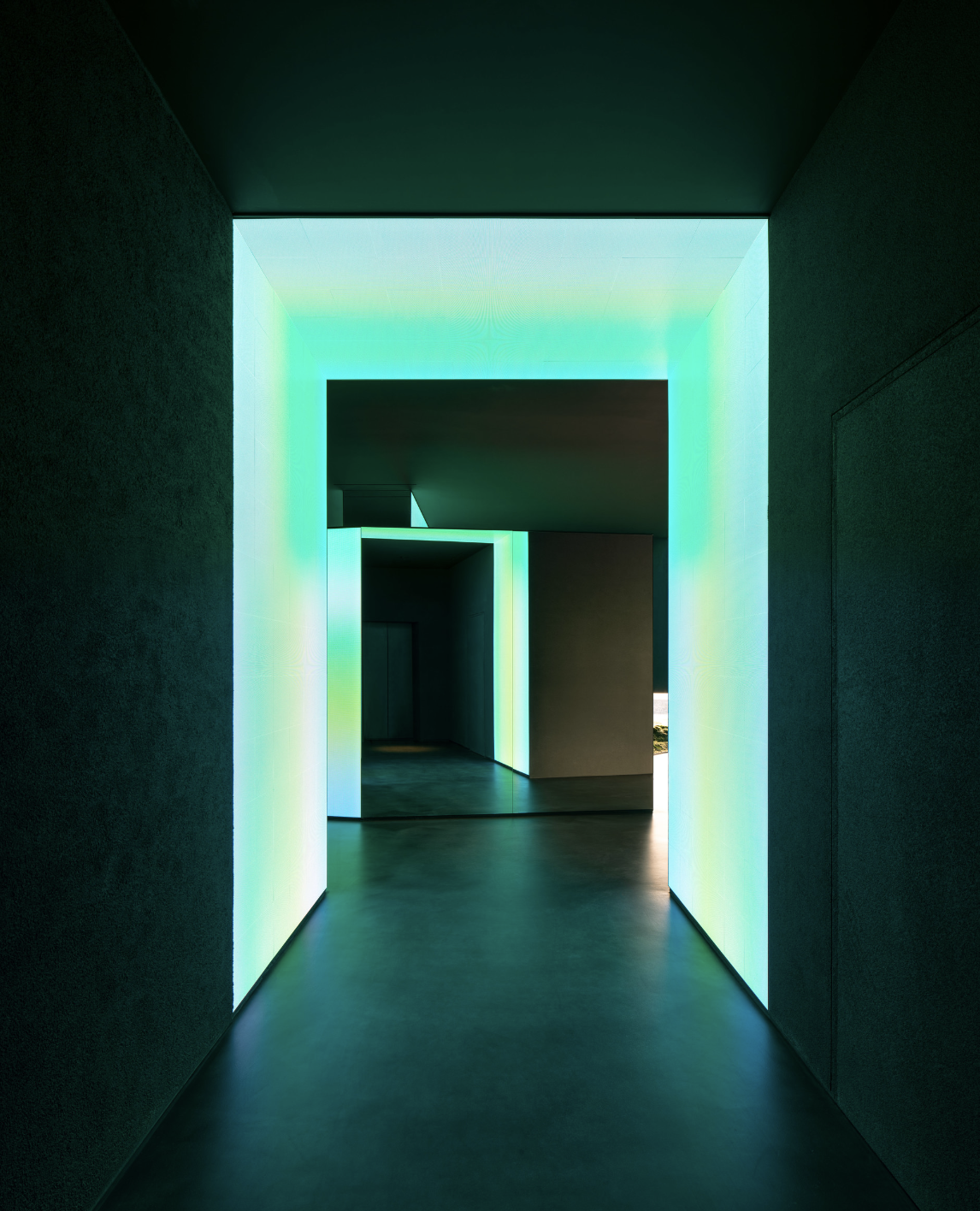
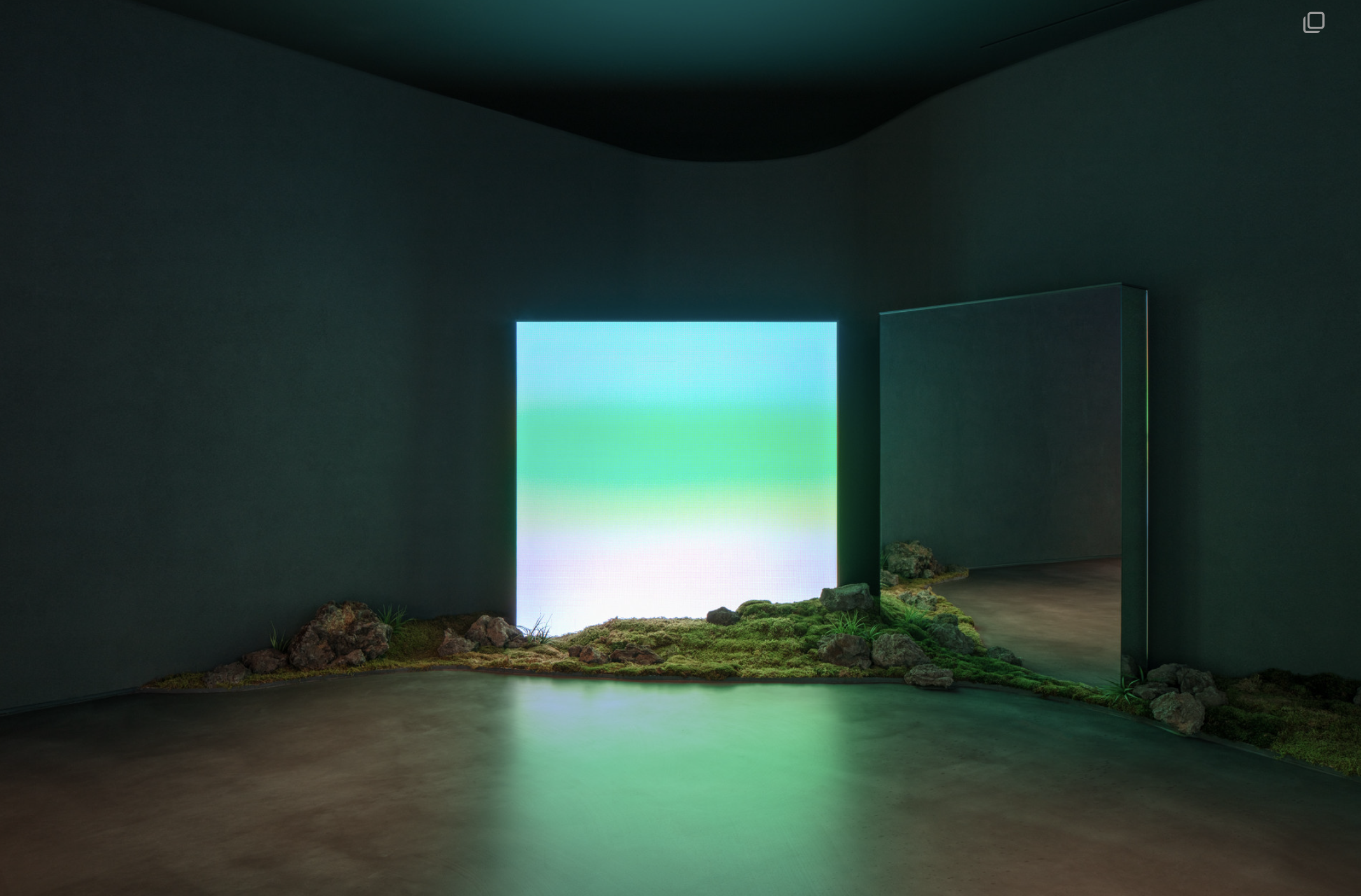
Zen Garden v.1 by Krista Kim in collaboration with Efren Mur
Zen Garden by Krista Kim
Zen Garden is a contemplative video art series by Krista Kim that distills the phenomenology of the natural landscape — earth, water, light at the horizon — into slowly shifting fields of digital color. A companion body of work to Continuum, the series shares its foundational mechanisms — spectral fluidity, Ganzfeld immersion, temporal entrainment — while deploying a distinct chromatic register rooted in the terrestrial and the aquatic: greens, yellows, oranges, and blues.
Where Continuum reclaims the urban screen as a chromotherapy chamber amid the spectacle of Times Square, Zen Garden enters the intimate architecture of daily life. Commissioned for the Atherton Upperhouse residential development in Pusan, South Korea — twelve homes overlooking Haeundae Bay, each containing a unique work from the series, synchronized every five minutes to create a shared communal rhythm — Zen Garden proposes the screen as a permanent domestic instrument of nervous system regulation. Not a painting on the wall. A living environment that breathes with the viewer.
The Palette: Earth and Water as Pharmacology
The Zen Garden gamut — greens, yellows, oranges, and blues — maps directly onto the wavelengths the human nervous system encounters in undisturbed natural environments: forest canopy, sunlit meadow, amber dusk, open water, clear sky. This is not coincidence. These are the spectral conditions under which the autonomic nervous system evolved to find equilibrium. Each hue in the palette functions as a wavelength-specific physiological intervention.
Green (495–570 nm) — The Neural Stabilizer
Green is the dominant tone of the terrestrial landscape — the color the eye processes with the least muscular effort, requiring no adjustment by the lens. A clinical trial at the University of Arizona (published in Cephalalgia, 2020) found that narrow-band green LED exposure reduced migraine frequency by 60% and pain intensity from 8 to 3.2 on a 10-point scale, with concurrent improvements in sleep, anxiety, and quality of life. The mechanism: green light stimulates the endogenous opioid system and activates anti-inflammatory pathways. A separate study found green light improved cognitive ability — recall and attention — in older adults compared to white light.
In Zen Garden, green is the earth tone. It grounds the viewer in the parasympathetic register of the forest floor — balancing the autonomic nervous system while activating the body's own analgesic and cognitive enhancement pathways. It is the palette's root system.
Yellow (570–590 nm) — Cognitive Clarity Without Arousal
Yellow occupies the highest-luminance position in the visible spectrum — the wavelength the eye is most sensitive to, the reason it is used for caution signals worldwide. In chromotherapy, yellow is clinically linked to stimulating the nervous system for mental clarity, focus, and alertness without the sympathetic aggression of red. It activates without agitating.
In Zen Garden, soft yellow is the sunlight on stone — the warmth of late morning in a raked gravel courtyard. By desaturating toward light, Kim keeps this most energetically visible wavelength within the parasympathetic window: present, luminous, gently clarifying.
Orange (590–620 nm) — Gentle Vitality
Research from UC Davis's Color Lab (a collaboration between the California Lighting Technology Center and the Center for Mind and Brain) found that amber lighting produced the fastest and greatest stress mitigation among all discrete colors tested, measured by both cortisol levels and EEG brainwave activity. Orange is associated with mood elevation, warmth, and a sense of somatic comfort.
In Zen Garden, soft orange is the dusk tone — the color of the sky over Haeundae Bay as the sun descends. It delivers cellular vitality while maintaining the calming logic of the gradient. Warmth without alarm. The body's recognition of the golden hour — the circadian signal that the day is yielding, that it is safe to rest.
Blue (450–495 nm) — The Parasympathetic Switch
A 2017 controlled study (PLOS ONE) found blue lighting accelerated post-stress relaxation threefold (recovery in 1.1 vs. 3.5 minutes). Clinical trials (2025) confirmed that blue-hued therapeutic environments significantly reduce anxiety scores (e.g., from 57.70 to 50.03 on the Beck Anxiety Inventory) by activating the parasympathetic nervous system via melanopsin-containing retinal ganglion cells. An fMRI study (Frontiers in Neurology, 2021) demonstrated that blue wavelength exposure strengthened the amygdala-DLPFC connection — the neural circuit governing emotional regulation.
In Zen Garden, blue is the water tone. The bay at dusk. The sky reflected in a still pool. It is the palette's deepest parasympathetic intervention — lowering heart rate, reducing blood pressure, withdrawing cortisol. The eye meets the ocean and the body remembers how to rest.
Spectral Fluidity: The Absence of Edges
Like Continuum, Zen Garden heals not through visual complexity but through its radical elimination. The gradient contains no edges, no borders, no geometric detail. Utilizing Rec. 2020 display standards at 10-bit to 12-bit depth — yielding over 1 billion to 68 billion discrete color values — every chromatic transition falls below the human visual modulation threshold. The eye encounters no banding, no perceptible steps between colors. The brain has nothing to resolve.
This is the mechanism of spectral fluidity: the reduction of neural processing load to near-zero through the engineered absence of visual demand. Research confirms that viewing patterns with smooth, continuous, nature-like visual statistics measurably reduces cognitive load — demonstrated through improved gait kinematics, a validated biomarker of reduced cognitive demand. Even in abstract form, simulated natural environments produce clinically significant decreases in total mood disturbance and increases in vigor.
Zen Garden's earth and water gradients — though nonrepresentational — provide the nervous system with nature's visual statistics: continuity, fluidity, the absence of hard edges. The viewer does not require a photograph of a garden to receive the garden's benefit. The viewer requires the garden's spectral logic. The gradient provides precisely this.
Ganzfeld Immersion: The Domestic Altered State
Installed within the private architecture of each Upperhouse residence, Zen Garden creates a localized Ganzfeld condition — a field of uniform, unstructured chromatic stimulation that, when it occupies a sufficient proportion of the viewer's visual field, causes the brain to cease external scanning and turn inward. Research on full-dome and "Future Screens" environments confirms that high immersion enhances the psychological sense of presence, and that dynamic environments produce deeper engagement than static ones.
In the domestic setting, this immersion is not spectacle. It is routine. The work synchronizes across all twelve residences every five minutes — creating a shared temporal rhythm, a communal Zeitgeber that binds the community to a collective pulse of stillness. The viewer does not visit Zen Garden. The viewer lives within it. Over time, the nervous system habituates not to agitation, but to calm. The screen becomes a permanent regulatory presence — a companion that breathes.
Temporal Entrainment: The Garden Breathes
Zen Garden's colors shift at a slow, non-linear pace that mirrors the 1/f noise (pink noise) dynamics of natural phenomena — the pace of shifting clouds, tidal movements, the slow rotation of light across a courtyard over the course of an afternoon. This temporal rhythm functions as an artificial Zeitgeber, entraining the viewer's autonomic nervous system to a slower operative rhythm.
In a residential context, this entrainment is cumulative. Unlike the acute intervention of Continuum in Times Square — three minutes of counter-stimulus amid urban chaos — Zen Garden operates as a chronic exposure. Daily, ambient, integrated into the rhythm of waking and sleeping. The clinical literature on light therapy consistently demonstrates that duration and regularity of exposure are the critical variables in therapeutic efficacy. Zen Garden is designed for both.
The Garden That Lives on the Screen
The Zen monks who created the Ryoanji Temple Garden 500 years ago understood that environment shapes consciousness — that the careful arrangement of stone, gravel, and negative space could still the mind and elevate awareness. They built a technology of contemplation from the materials of their moment.
Zen Garden carries this tradition forward through the materials of ours: spectrally pure wavelengths, Rec. 2020 display precision, and the four mechanisms of digital healing — spectral fluidity (the elimination of edges via extreme bit-depth), chromotherapy (wavelength-specific nervous system regulation through earth and water tones validated in clinical trials), Ganzfeld immersion (inducing introspective states through the architectural-scale removal of structured visual input), and temporal entrainment (1/f pacing as Zeitgeber, synchronizing biological clocks to the rhythm of natural phenomena).
Where Continuum transforms the city into a clinic, Zen Garden transforms the home into a sanctuary. The raked gravel becomes a gradient. The stones become wavelengths. The garden lives on the screen — and the screen, at last, becomes a place of healing.
Krista Kim. Zen Garden series. Commissioned for the Atherton Upperhouse, Haeundae, Pusan, South Korea. Video art installation, Rec. 2020 display, synchronized across twelve residences.